People of Nelt | Dušan Mančić | A career in sales took him to Africa, and Duolingo helped him prepare for a new beginning

Practising Portuguese in the field and playing football even after 15 hours of travelling
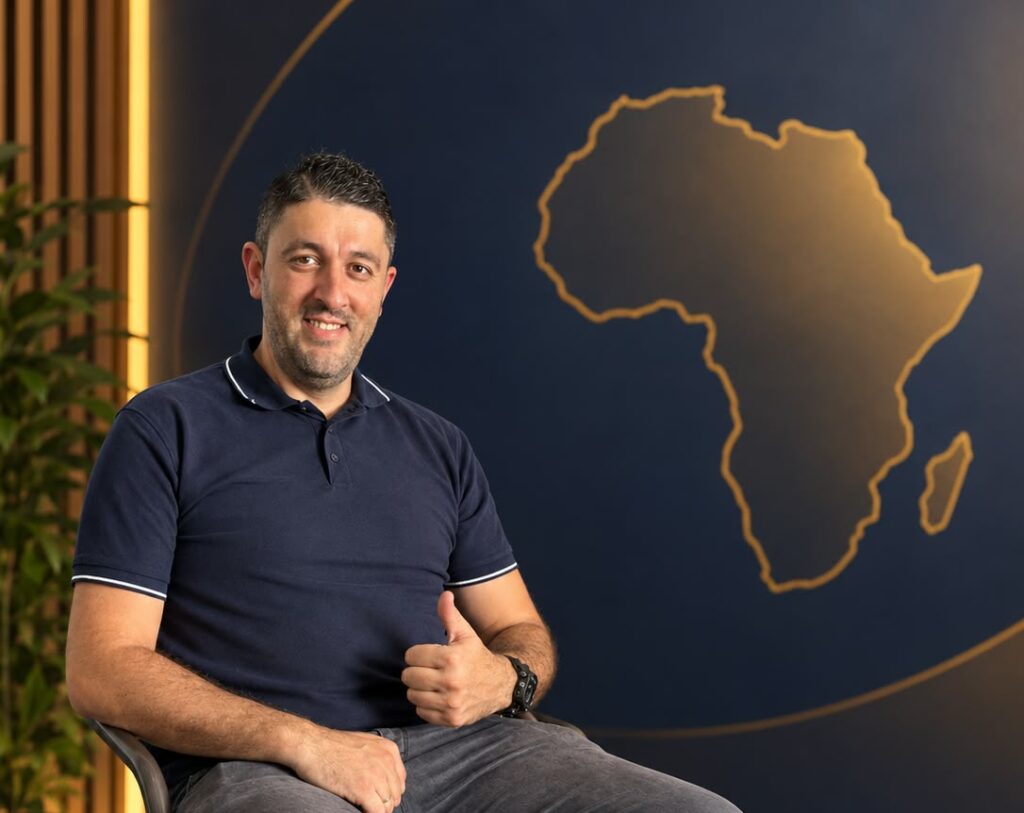
Dušan Mančić, Senior Sales Supervisor for International Markets at Nelt Angola, joined our company in 2009. He worked as a warehouse operative and forklift operator before moving into sales and progressing to a supervisory role. After Serbia, he continued his career in Mozambique and then Angola.
Moving to Africa was a major professional and personal change, and a decision he made together with his wife.
In our latest People of Nelt interview, Dušan talks about his career, working with local teams and the importance of combining sales performance with people development. He also shares how he learned Portuguese through Duolingo, language classes and everyday conversations in the field.
Find out what it was like to attend an Angolan wedding, why he never misses football even after more than 15 hours of travelling, and what he misses about Serbia while in Angola – and about Angola when he returns home.
Read the full interview with Dušan.
***
What has your career journey at Nelt been like?
My first day at Nelt was in 2009, when I started working through a youth employment agency. I became a permanent employee in 2011.
I started as a warehouse operative in the promotional materials warehouse, where I spent six and a half years, followed by a year and a half as a forklift operator in the customs warehouse. I moved into sales in 2018, when D Way launched, joining the OT sales team. After a year and a half, we merged with the TT channel. After approximately four years as a sales representative, I became a TT Channel Supervisor within my division. My next major step was moving to Mozambique as Supervisor for the Northern Region. Since 2026, I have been working as a Senior Sales Supervisor in Angola.
What would you highlight as your greatest career achievement so far?
I would highlight being able to combine sales performance with people development. An important part of a supervisor’s role is helping the team understand how to reach its targets. That is why I place particular emphasis on hands-on work with colleagues in the field. Through joint customer visits and specific feedback, we identify opportunities for improvement and work on them straight away.
A good example is my work with the dedicated Nestlé team and PSR, when we almost doubled sales volume in a relatively short period and improved market coverage across all operating centres.
Moving to Africa was a major life change. How did you make that decision, and what was it like adjusting to life first in Mozambique and then in Angola?
The most important thing was to make the decision together with my wife, because moving to another continent is a major change for both of us. Once we agreed, all that remained was to sort out the paperwork and for me to set off.
My first days in Mozambique felt like arriving on another planet. Different infrastructure and traffic, the language barrier, uncertainty about food and water, and concerns about malaria made those early days quite intense. At two metres tall, I attracted attention, but I could not understand what people around me were saying.
The first month was stressful, despite the preparation. Over time, I settled in, and many things that initially felt unfamiliar became part of everyday life. Moving to Angola was easier. Luanda is much more urban than Nampula, and my experience in Mozambique helped me know what to expect, although the new environment brought its own challenges.
How different is life in Angola from life in Serbia? What surprised you most, and what have you grown particularly fond of?
There are major differences, from the climate and daily habits to business culture. What stands out most for me is the different pace of life and the need for greater flexibility. You learn that some things take more time and that you need to adapt your approach while keeping your goals in focus.
What surprised me most was how important it is to understand the local context. Experience from Serbia is useful, but you have to find a way to connect company standards with market conditions and the needs of the local team. Besides the lovely weather, I have grown fond of people’s energy, the different culture and the opportunity to discover something new every day.
How did you learn Portuguese? Do you have any interesting or funny stories from when you first started speaking it?
Ah, I was afraid of this question! Joking aside, a lot depends on how much you want to learn the language and how willing you are to use it.
From the moment I started preparing for Mozambique, I practised with Duolingo – sometimes for five minutes, sometimes for 45 minutes a day. I still use it today. The company also provided language classes, and I passed the A1 and A2 levels. I tried to put everything I learned into practice straight away.
The best advice came from my manager at the time, Aleksandar Tembeleski: spend as much time as possible in the field and speak, even if you make mistakes. That proved to be an excellent approach.
There were plenty of funny situations, particularly because of the differences between the Brazilian Portuguese I heard in the app and the pronunciation I encountered in the field. Sometimes I would greet someone, get a puzzled look and think: “Who knows what I just said!” Over time, both your language skills and your confidence grow.
You also attended an Angolan wedding. How did you come to be there, and what stood out most?
A colleague from my sales team got married in July this year. I was pleasantly surprised by the invitation because I had been in Angola for a relatively short time. I saw it as a sign that the team had accepted me.
The reception at the restaurant was scheduled for 8 p.m., but the newlyweds arrived around midnight. That timing was the biggest difference compared with weddings back home – the main part of the evening started much later than I expected.
Once the music started, it was impressive to see how many people were dancing and how naturally dance, especially kizomba, fitted into the celebration. Hospitality and the desire to share important moments with those close to us are things we have in common in Serbia and Angola.
We know you love football! Is it still an essential part of catching up with friends when you return to Serbia?
After seeing family and friends, football is next on the list. Almost every time, I arrange a game for the evening of my arrival, even after more than 15 hours of travelling.
Over the years, we have brought together a varied group for whom the “third half” is often the most important part of getting together. That is when we launch into discussions about life that even the greatest philosophers could never put into words!
Coffee with my former sales team and going hunting are also a must. Just being out in nature makes me feel like I am on holiday.
What do you miss most about Serbia while you are in Angola, and what do you miss about Angola when you return home?
Besides family, friends, football and hunting, I mostly miss burek and yoghurt, ćevapi, roast meat and, of course, the atmosphere of our traditional taverns. When I am in Serbia, I miss the ocean, seafood and some of the everyday routines I have picked up in Angola.
What advice would you give colleagues considering an international career within Nelt Group?
Take the opportunity if that is the kind of experience you want, but go prepared to learn. An international career brings a new market, different people and situations you have never encountered before.
It is important not to expect everything to be easy or to have all the conditions you are used to from day one. You need to listen, ask questions, learn and be willing to look for different solutions.
It is equally important to share what you learn and help colleagues develop.
Which colleague would you swap roles with for a day, and why?
I would like to swap roles with Jelena Perić or Slobodan Milosavljević, who work as Portfolio Managers. I would be interested to see first-hand how decisions about brands, product ranges and profitability are made.
I have spent most of my career in sales, so I am used to thinking about customers, fieldwork and distribution. It would be interesting to see the business from another perspective and understand how those decisions connect with what is happening in the market.
How do you most enjoy spending your free time, and what would your ideal day away from work look like?
My wife recently joined me in Luanda, so we now spend most of our free time together.
My ideal day does not have to be anything spectacular: family, good company, good food, a little football or hunting when I am in Serbia. What matters most is the feeling that I do not have to rush anywhere. With all our daily responsibilities, you realise how valuable a day when you can relax really is.
What is your unfulfilled dream?
As a child, I dreamed of becoming a train driver, so my dreams have changed quite a bit since then.
Today, I want to build a stable and happy family life with my wife, have enough time for each other and enjoy what we achieve together. I would like to keep pushing my boundaries while preserving what matters most to me.